 Contact


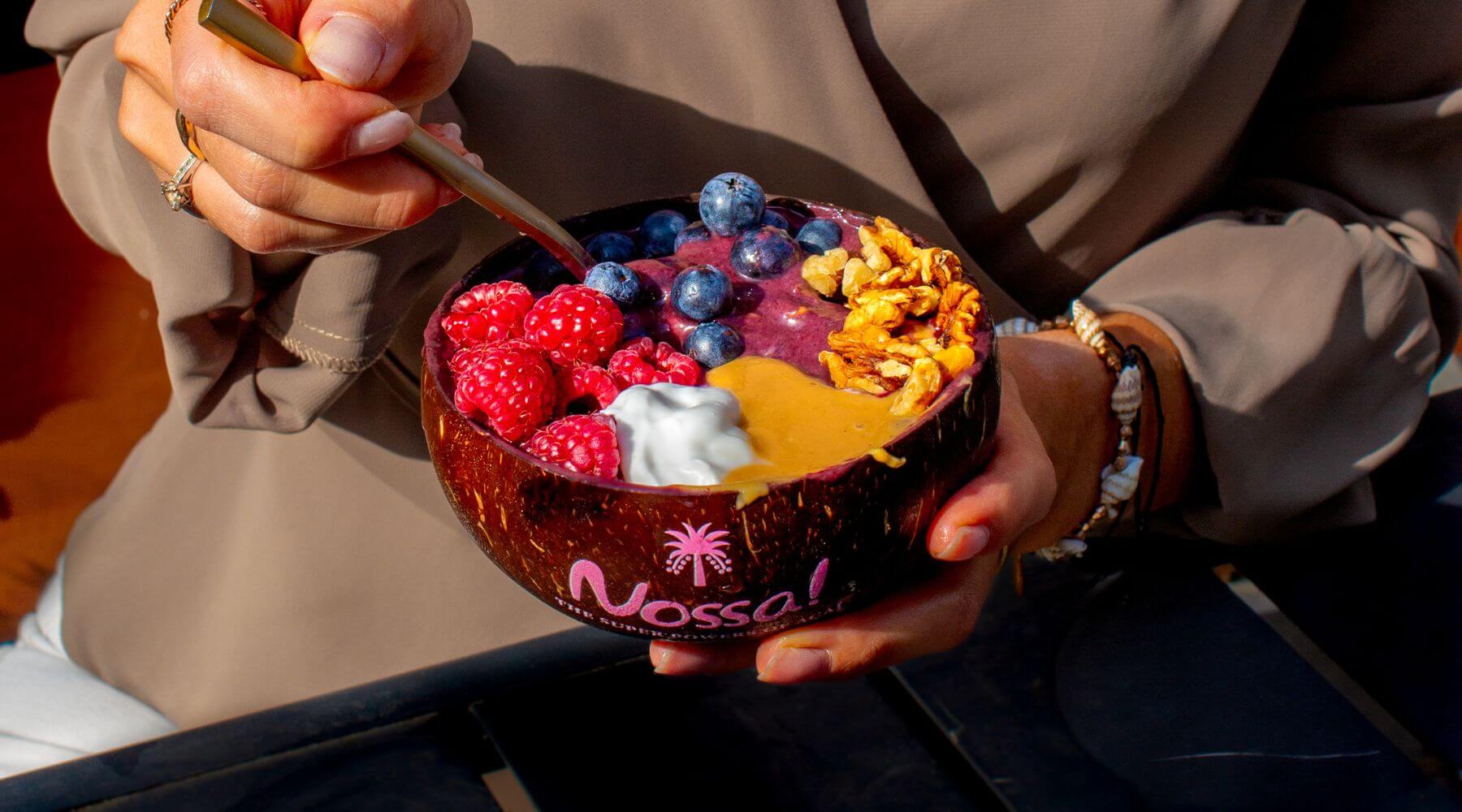
L’açai bowl est un incontournable des petits-déjeuners équilibrés. Habituellement, nos dosettes d'açai sont à mixer avec une banane pour une texture glacé qui se rapproche d'un sorbet naturel. Notre idée d'ajouter du yaourt à la base d’un açai bowl est une excellente façon d’apporter de l'onctuosité, valeur nutritionnelle et consistance au mélange.
Mais au-delà de la simple recette, de nombreuses questions reviennent souvent : faut-il utiliser du yaourt ? L’açai bowl est-il riche en protéines ? Peut-on réaliser une version végétale ? Nous vous répondons à toutes ces interrogations pour vous proposer la meilleure expérience possible avec l'acai !
L’açai est-il bon avec du yaourt ?
L’açai se marie parfaitement avec le yaourt pour plusieurs raisons. D’abord, sur le plan gustatif, le yaourt apporte une texture onctueuse qui adoucit l’acidité naturelle de la purée d’açai. Cela permet d’obtenir une base plus crémeuse, surtout lorsqu’on travaille avec une purée bien froide et non sucrée. Cette combinaison crée un équilibre subtil, sans qu’il soit nécessaire d’ajouter une grande quantité de sucrants.
Ensuite, le yaourt a aussi une fonction technique car il facilite le mixage et stabilise la texture du bowl. Lorsqu’on mixe la purée d’acai avec une banane et une cuillère de yaourt, on obtient une consistance plus homogène, qui tient bien dans le bol et se prête parfaitement à une version avec des toppings.
Enfin, sur le plan nutritionnel, le yaourt apporte des éléments complémentaires à l’acai comme des protéines, du calcium et parfois des probiotiques lorsqu’il s’agit de yaourt fermenté. Cela en fait une base idéale pour les personnes cherchant à allier plaisir gustatif et équilibre alimentaire.

Est-ce que l’açai bowl est riche en protéines ?
L’açai pur est un fruit intéressant pour ses fibres, ses acides gras insaturés (oméga-6 et oméga-9) et ses antioxydants naturels (polyphénols et anthocyanes), mais il n’est pas naturellement riche en protéines. C’est pourquoi l’ajout d’un yaourt à haute teneur protéique est intéressant pour transformer un açai bowl en petit-déjeuner complet et rassasiant.
Certains yaourts sont particulièrement adaptés pour cela :
- Le skyr nature qui est très riche en protéines, faible en sucres et très onctueux.
- Le petit-suisse nature qui a une texture dense, idéal pour apporter de la consistance et possède le même taux en protéine que le skyr.
- Le yaourt grec qui est plus crémeux et plus protéiné que les yaourts classiques.
Ces options permettent de renforcer la satiété, de soutenir la récupération musculaire après une activité physique et d’assurer une meilleure répartition des apports protéiques tout au long de la journée. Un açai bowl enrichi en protéines permet également d’éviter les fringales de fin de matinée, souvent observées avec les petits-déjeuners trop sucrés ou pas assez équilibrés.
L’association de l’açai avec une source de protéines s’inscrit donc dans une approche nutritionnelle plus complète. En effet, le fruit apporte l’énergie et les micronutriments, tandis que le yaourt complète l’apport en macronutriments.
Retrouvez aussi notre recette d'acai bowl protéiné
Peut-on utiliser du yaourt végétal dans un açai bowl ?
Oui, il est tout à fait possible de préparer un açai bowl 100% végétal en remplaçant le yaourt classique par un yaourt d’origine végétale. Le résultat est tout aussi onctueux, à condition de bien choisir son yaourt végétal. Pour que la recette reste équilibrée et nourrissante, il est recommandé d’opter pour des alternatives végétales nature (non sucrées) et riches en protéines.
Voici quelques options intéressantes :
- Yaourt de soja nature : c’est la meilleure alternative végétale en termes d’apport en protéines, proche du yaourt classique.
- Mélange amande-soja : combine l’onctuosité des oléagineux et la richesse protéique du soja.
- Yaourt à base d’avoine enrichie en protéines : une option intéressante pour une texture plus douce.
Ces alternatives conviennent parfaitement aux personnes intolérantes au lactose, végétariennes ou véganes, sans compromettre la texture ni la valeur nutritionnelle de la recette. Elles permettent aussi de varier les saveurs et de personnaliser son acai bowl en fonction des préférences.
Nos conseils pour réussir son açai bowl au yaourt
Pour réussir un acai bowl, la clé réside dans l’équilibre entre les ingrédients. La purée d’acai apporte la base antioxydante et fruitée, le yaourt apporte structure et protéines, et les toppings ajoutent textures et nutriments complémentaires. Voici quelques conseils simples :
-
Utilisez une purée d’acai bio et équitable, non sucrée, pour garder le contrôle sur la composition. À retrouver au rayon surgelé des magasins bios sous la marque Terraçai by Nossa!
-
Mixez la dosette encore surgelée : coupez-la en morceaux avant de la placer dans le blender. Cela facilite le mixage tout en gardant une texture glacée et dense.
-
Mettre la banane et le yaourt en premier dans le mixeur : cette étape crée une base crémeuse qui va aider à faire tourner plus facilement les morceaux d’açai surgelés.
-
Ne pas laisser fondre la dosette avant de mixer : le yaourt va naturellement liquéfier la préparation. Si l’açai est déjà décongelé, vous obtiendrez une texture de smoothie, et non celle d’un vrai açai bowl glacé.
-
Évitez les toppings trop sucrés : le bowl doit rester frais, équilibré et digeste. Privilégie les fruits frais, les oléagineux, le granola maison et le yaourt nature.
-
Si besoin de sucrer la préparation, optez pour un filet de sirop d’érable plutôt que du sucre raffiné, pour une touche sucrée naturelle qui respecte la saveur du fruit.
Notre recette d’açai bowl au yaourt

Ingrédients (pour 1 acai bowl)
Pour la base :
- 200 g de purée d’açai bio et équitable Terraçaí by Nossa!
- 1 very ripe banana
- 1 cuillère à soupe de yaourt (Skyr, petit-suisse ou yaourt végétal riche en protéines)
- 1 cuillère à soupe de sirop d’érable (facultatif)
Pour les toppings :
- Myrtilles fraîches
- Framboises fraîches
- Quelques noix concassées
- 1 tablespoon of peanut butter
- 1 cuillère à soupe de yaourt (pour la finition)
- Un filet de sirop d’érable
Preparation
-
Mixer la base
Dans un blender, déposer la purée d’açai encore bien froide, la banane coupée en morceaux, le yaourt et le sirop d’érable. Mixer par impulsions courtes pour garder une texture dense et onctueuse. Si le mélange est trop épais, ajouter une cuillère d’eau ou de lait (végétal ou non). -
Verser dans un bol
Verser la préparation dans un bol large et peu profond pour pouvoir ajouter les toppings de façon uniforme. -
Ajouter les toppings
Disposer les myrtilles, les framboises, les noix concassées, une cuillère de beurre de cacahuète et un peu de yaourt sur le dessus. Terminer par un filet de sirop d’érable pour une touche sucrée naturelle. -
Déguster immédiatement
L’açai bowl se déguste frais, juste après la préparation, pour profiter au maximum de sa texture et de sa valeur nutritionnelle.
Cette recette simple et modulable s’adapte à différents besoins. En effet, elle convient aussi bien aux sportifs qui recherchent une collation protéinée, qu’aux personnes souhaitant un petit-déjeuner équilibré ou simplement une façon gourmande de varier les plaisirs au quotidien et diversifier son acai bowl.

